This is for the weekly Catholic Carnival! This is my first one!
Be sure to visit RAnn at This, That and the Other Thing and check out some posts from other bloggers participating in Sunday Snippets this week. Why not join us and share a blog post or two from last week?
Question of the week: Name a favorite book and tell us what you like about it.
My favorite book for now is Fill These Hearts by Christopher West.
I like this book since it presents the Theology of the Body of Pope John Paul the Great in a casual style. This style is further accentuated by his connections between the topic and popular music (a niche of my blog). It was so understandable, in my opinion, that I suggested it to a non-Catholic acquaintance for further understanding of the Theology of the Body (she's from Turkey).
For the week of February ninth:
February tenth:
Commentary on the movie The Lone Ranger with Johnny Depp.
http://wonderingzygoteemeritus.blogspot.com/2014/02/the-lone-ranger-part-i.html
http://wonderingzygoteemeritus.blogspot.com/2014/02/the-lone-ranger-part-ii.html
February twelfth:
Commentary on the movie The Lone Ranger with Johnny Depp.
http://wonderingzygoteemeritus.blogspot.com/2014/02/the-lone-ranger-part-iii.html
Commentary on the creationism/scientism debate between Bill Nye and Bill Ham.
http://wonderingzygoteemeritus.blogspot.com/2014/02/nye-ham-debate-wacky-wednesday.html
Commentary on the TV show The Big Bang Theory theme song.
http://wonderingzygoteemeritus.blogspot.com/2014/02/the-big-bang-theory-theme-song-part-iv.html
February fourteenth:
A video of my Valentine from my wife.
http://wonderingzygoteemeritus.blogspot.com/2014/02/happy-saint-valentines-day.html
21 February 2014

Ender's Game Part II
***Spoilers Alert!*** One other big thing in Ender's Game was that Ender unknowingly wiped out the entire alien species, except for what looked like a worker and a queen. This reminded me of that story in the Bible where the Israelites where commanded to put the ban on an entire people, or tribe.
The Israelite king tried to save one person from this enemy nation, but the Israelite prophet Saul chastised him and killed the last one himself.
Just like the whole creation/evolution debate, this genocide problem in the Bible had been thought about from the beginning of Christianity.
The one obvious move was to deny that the Old Testament is really inspired by God or reveals a God that Jesus was talking about in the New Testament. This banning of the Old Testament was declared a heresy called Marcionism by the early Church.
Another option was to see if these and other vexing stories in the Bible (like the creation story in Genesis) could be seen as more allegorical. Origin of Alexandria was a leading proponent of this idea.
Father Barron can say more about this option.
I think this allegorical option is a good one, especially since the Old Testament, "contain[s] matters imperfect and provisional".
Ender knew that the genocide he unknowingly carried out was wrong. He tried to make amends at the end of the movie.
The Church officially has the same take on genocide, it is to be rejected. She is with Ender. She teaches that "One is morally bound to resist orders that command genocide."
Here's Part I.
The Israelite king tried to save one person from this enemy nation, but the Israelite prophet Saul chastised him and killed the last one himself.
Just like the whole creation/evolution debate, this genocide problem in the Bible had been thought about from the beginning of Christianity.
The one obvious move was to deny that the Old Testament is really inspired by God or reveals a God that Jesus was talking about in the New Testament. This banning of the Old Testament was declared a heresy called Marcionism by the early Church.
Another option was to see if these and other vexing stories in the Bible (like the creation story in Genesis) could be seen as more allegorical. Origin of Alexandria was a leading proponent of this idea.
Father Barron can say more about this option.
I think this allegorical option is a good one, especially since the Old Testament, "contain[s] matters imperfect and provisional".
Ender knew that the genocide he unknowingly carried out was wrong. He tried to make amends at the end of the movie.
The Church officially has the same take on genocide, it is to be rejected. She is with Ender. She teaches that "One is morally bound to resist orders that command genocide."
Here's Part I.
20 February 2014
CA Splitting Up
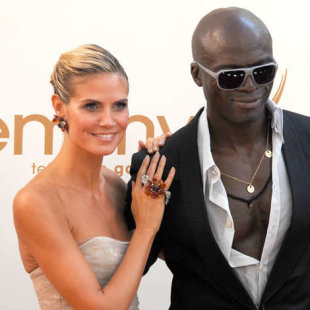
On yesterday's Wacky Wednesday, I reported that Seal and Heidi Klum may be patching up their marriage.
Not so good news for their state of California: it may be splitting up into six states.
Well, Facebook is already prepared. It just added six more gender options to its list.
I already put in brackets ("[ ]") the six regional names that were proposed in the quote above. What do you think the names or nicknames of these regions should be?
Some ideas of mine:
[1] "South California." California Caliente
[2] "West California" California Cara
[3] "Central California." California Liberal
[4] "Silicon Valley." California Próspera
[5] "North California" California Corrupta
[6] "Jefferson" California Ventosa
Not so good news for their state of California: it may be splitting up into six states.
[Tim Draper] proposed dividing California into six states. San Diego and Orange County would make up [1] "South California." [2] "West California" would include Los Angeles and Santa Barbara, while Bakersfield, Fresno and Stockton would make up the larger [3] "Central California." San Francisco and San Jose would be in the new [4] "Silicon Valley." [5] "North California" would include the Sacramento area, and [6] "Jefferson" would be home to the Redding and Eureka areas.
 |
| http://news.yahoo.com/petition-split-california-6-states-gets-green-light-213801353--abc-news-topstories.html |
I already put in brackets ("[ ]") the six regional names that were proposed in the quote above. What do you think the names or nicknames of these regions should be?
Some ideas of mine:
[1] "South California." California Caliente
[2] "West California" California Cara
[3] "Central California." California Liberal
[4] "Silicon Valley." California Próspera
[5] "North California" California Corrupta
[6] "Jefferson" California Ventosa
19 February 2014
Wacky Wednesday Klum and Seal
 | |
| http://shine.yahoo.com/love-sex/could-heidi-klum-seal-reportedly-back-together-202700107.html |
Is seems like Seal's range is elastic.
I hope that's it's true:
This picture's a view
Of runways re-latching. Fantastic!
17 February 2014
Ender's Game Part I
I read Ender's Game, the 1985 science fiction novel by Orson Scott Card, in a book club a few years ago. The Ender's Game movie, like many movies-from-books, took out many necessary items and added some political jabs (if something is repeated enough, it must be true).
This post is about one of the political jabs in the movie.
Despite the lack of communication from the aliens in the movie (who were not excessively referred to as "bugs" in the movie as they were in the book; more on this in Part II), the humans knew that they were being attacked/annihilated for more land. The additional land for the bugs was necessary since they over-bred on their own planet (they sort-of looked like a cross between an ant and a bee in the movie, at a human scale).
That was the first instance of the so-called over-population meme in the movie. Watch out! or the Earth may turn out like the bug planet.
Second, Ender was the third child of his family. Normally, in the movie universe, a family was permitted to have only two children. Hmm, a two-child policy was the second instance of the over-population meme.
Why do many Christians care about the proliferation of the so-called over-population movement? First, it is not true. We usually don't like falsehood, being one part of the Decalogue n' at.
Second, it treats a family as a ward of the state. The family is pre-state and each particular one determines how that family is constituted within the natural-law framework (man-woman; open to life). Jesus, in the Gospel of Matthew said, "no man must separate" the couple, including in the process of procreation (one-flesh union).
Communist China's one-child policy treats each family as a unit of the state that must follow state laws above all else. However, natural law, which is to regulate state law, takes precedence. The number one natural law is that people are rational creatures who are due respect and dignity of the state, not for the state to claim them as commodity units for its own means or ends.
Many Christians have reported on the brutality and immorality of population control programs, especially in China.
The producers and/or writers of Ender's Game have just jabbed another fictional example of the Malthusian lie of over-population that quite often looks up to China as an ideal for population control.
If it's portrayed enough, it must be true. (sarcasm)
This post is about one of the political jabs in the movie.
Despite the lack of communication from the aliens in the movie (who were not excessively referred to as "bugs" in the movie as they were in the book; more on this in Part II), the humans knew that they were being attacked/annihilated for more land. The additional land for the bugs was necessary since they over-bred on their own planet (they sort-of looked like a cross between an ant and a bee in the movie, at a human scale).
That was the first instance of the so-called over-population meme in the movie. Watch out! or the Earth may turn out like the bug planet.
Second, Ender was the third child of his family. Normally, in the movie universe, a family was permitted to have only two children. Hmm, a two-child policy was the second instance of the over-population meme.
Why do many Christians care about the proliferation of the so-called over-population movement? First, it is not true. We usually don't like falsehood, being one part of the Decalogue n' at.
Second, it treats a family as a ward of the state. The family is pre-state and each particular one determines how that family is constituted within the natural-law framework (man-woman; open to life). Jesus, in the Gospel of Matthew said, "no man must separate" the couple, including in the process of procreation (one-flesh union).
Communist China's one-child policy treats each family as a unit of the state that must follow state laws above all else. However, natural law, which is to regulate state law, takes precedence. The number one natural law is that people are rational creatures who are due respect and dignity of the state, not for the state to claim them as commodity units for its own means or ends.
Many Christians have reported on the brutality and immorality of population control programs, especially in China.
The producers and/or writers of Ender's Game have just jabbed another fictional example of the Malthusian lie of over-population that quite often looks up to China as an ideal for population control.
If it's portrayed enough, it must be true. (sarcasm)
The Big Bang Theory Theme Song Part V
Here are Part I, Part II, Part III, and Part IV.
So, the Ham-Nye debate on creationism-scientism revealed something noteworthy about The Big Bang Theory theme song. It is dead wrong in one stanza.
It was indeed theorized that the universe was sort-of like a yo-yo that continually expanded asymptotically to a "pause" and then collapsed into another big bang. This idea supposedly helped show that the universe was infinite in age (helped an Atheist argument against God).
Well, without going into philosophical problems about this infinite-universe-from-the-yo-yo idea (how did yo-yo start?), science has further supported the Christian assertion that the universe has a creator, whom Christians call God.
So, the Ham-Nye debate on creationism-scientism revealed something noteworthy about The Big Bang Theory theme song. It is dead wrong in one stanza.
It all started with the big BANG!According to Bill Nye in the debate, in 2004, observations were conducted to show that the universe is actually expanding at a greater rate (accelerating) and not going "the other way. / Collapsing ever inward".
It's expanding ever outward but one day
It will pause and start to go the other way.
Collapsing ever inward, we won't be here, it won't be heard
Our best and brightest figure that it'll make an even bigger bang!
It was indeed theorized that the universe was sort-of like a yo-yo that continually expanded asymptotically to a "pause" and then collapsed into another big bang. This idea supposedly helped show that the universe was infinite in age (helped an Atheist argument against God).
Well, without going into philosophical problems about this infinite-universe-from-the-yo-yo idea (how did yo-yo start?), science has further supported the Christian assertion that the universe has a creator, whom Christians call God.
14 February 2014
Happy Saint Valentine's Day
Happy Saint Valentine's Day!
From Catholic Online:
From Catholic Online:
Valentine was a holy priest in Rome, who, with St. Marius and his family, assisted the martyrs in the persecution under Claudius II. He was apprehended, and sent by the emperor to the prefect of Rome, who, on finding all his promises to make him renounce his faith ineffectual, commanded him to be beaten with clubs, and afterwards, to be beheaded, which was executed on February 14, about the year 270.
My Valentine
13 February 2014
Follow By Email Widget Now Working
Hello all,
The "Follow By Email" widget that's on the right-hand side of this blog wasn't working. It is now fixed. Please feel free to follow by email.
If you get a chance, please leave a comment or two on a post. I would love to hear from you.
Thanks,
Gerry M
The "Follow By Email" widget that's on the right-hand side of this blog wasn't working. It is now fixed. Please feel free to follow by email.
If you get a chance, please leave a comment or two on a post. I would love to hear from you.
Thanks,
Gerry M
12 February 2014
The Lone Ranger Part III
Here's Part I of The Lone Ranger.
Here's Part II of The Lone Ranger.
I was wondering about the possibility that The Lone Ranger movie helps to prove Dr. Craig's knock-down point about Atheist Sam Harris and his Moral Landscape (see the video below at 8:44 for the knock-down argument to Harris' definition of "good").
Perhaps the flourishing of the Cavendish brothers ("conscious creatures"), and really the flourishing of the rest of the country for the "progress" they provided, over the destruction of the tribes they massacred would prove Dr. Craig's point that the definition of the "good" Harris provides is a deal-breaker for his moral landscape argument.
Here's Part II of The Lone Ranger.
I was wondering about the possibility that The Lone Ranger movie helps to prove Dr. Craig's knock-down point about Atheist Sam Harris and his Moral Landscape (see the video below at 8:44 for the knock-down argument to Harris' definition of "good").
Perhaps the flourishing of the Cavendish brothers ("conscious creatures"), and really the flourishing of the rest of the country for the "progress" they provided, over the destruction of the tribes they massacred would prove Dr. Craig's point that the definition of the "good" Harris provides is a deal-breaker for his moral landscape argument.
Nye-Ham Debate Wacky Wednesday
So, I thought I would do something different. It is called Wacky Wednesday.
For this installment, I composed a limerick about the Nye-Ham (Bill Nye and Bill Ham) debate between scientism and creationism.
Here's the debate:
Here's the limerick:
Ham and Nye are so very suspicious.
Ham on rye: it is oh so delicious.
Is it God who they seek?
Both their posits are weak.
Without God nothing could be nutritious.
(BTW, this article can shed some light on my limerick: "Creationism Is Materialism's Creation")
For this installment, I composed a limerick about the Nye-Ham (Bill Nye and Bill Ham) debate between scientism and creationism.
Here's the debate:
Here's the limerick:
Ham and Nye are so very suspicious.
Ham on rye: it is oh so delicious.
Is it God who they seek?
Both their posits are weak.
Without God nothing could be nutritious.
(BTW, this article can shed some light on my limerick: "Creationism Is Materialism's Creation")
The Big Bang Theory Theme Song Part IV
Here are Part I, Part II, and Part III.
Have you noticed that The Big Bang Theory theme song lyrics are mostly descriptive of how the universe and humans came to be?
There are four ways to describe things that Aristotle wrote about, called Aristotle's Four Causes. They are:
The only lines that minimally address the formal and final causes are:
I was asked once by a middle school student why they needed to learn about formal and final causes (I didn't present the labels formally, but was teaching them nonetheless). The student thought that school was solely about learning what they needed to get a good job, mainly with science and math. I couldn't blame her assessment since public education (in government schools), especially now with Common Core, stresses only material and efficient causes in the classroom.
There are schools which teach the entire range of causes called classical schools (here's a link to an institute on the subject; here's a school list), but they are few in number.
From the link above:
Have you noticed that The Big Bang Theory theme song lyrics are mostly descriptive of how the universe and humans came to be?
There are four ways to describe things that Aristotle wrote about, called Aristotle's Four Causes. They are:
- The material cause; What is the thing made out of?
- The formal cause; What is the essential structure of the thing?
- The final cause; Where it the thing headed? What is its purpose or ultimate orientation (telos)?
- The efficient cause; How did the thing get where it is? How did it come to be?
The only lines that minimally address the formal and final causes are:
Math, science, history, unraveling the mysteries,Why does this matter? Many young people think that all one needs to learn about are the material and efficient causes, especially in school.
That all started with the big bang!
...
Australopithecus would really have been sick of us
Debating how we're here they're catching deer (we're catching viruses)
Religion or astronomy, Descartes or Deuteronomy
It all started with the big bang!
Music and mythology, Einstein and astrology
It all started with the big bang!
It all started with the big BANG!!!
I was asked once by a middle school student why they needed to learn about formal and final causes (I didn't present the labels formally, but was teaching them nonetheless). The student thought that school was solely about learning what they needed to get a good job, mainly with science and math. I couldn't blame her assessment since public education (in government schools), especially now with Common Core, stresses only material and efficient causes in the classroom.
There are schools which teach the entire range of causes called classical schools (here's a link to an institute on the subject; here's a school list), but they are few in number.
From the link above:
[1] But I observed that even the good artisans fell into the same error as the poets; because they were good workmen they thought that they also knew all sorts of high matters, and this defect in them overshadowed their wisdom.... – Socrates, The Apology
[2] Hence it is that his education is called "Liberal." A habit of mind is formed which lasts through life, of which the attributes are, freedom, equitableness, calmness, moderation, and wisdom.
[3] But education is a higher word [than instruction]; it implies an action upon our mental nature, and the formation of a character; it is something individual and permanent, and is commonly spoken of in connexion with religion and virtue. When, then, we speak of the communication of Knowledge as being Education, we thereby really imply that that Knowledge is a state or condition of mind.... Newman, Idea of a UniversityMay we return to learning about the fullness of God's creation with all its causes.
10 February 2014
The Lone Ranger Part II
Here's Part I of The Lone Ranger.
***Spoilers Alert*** In the last post on The Lone Ranger, it was pointed out that the The Lone Ranger was really the natural man as written about in Locke's Two Treatises of Government instead of the scholarly man John Reid.
In this post, I would like to examine the Christians in the movie (without excusing them).
Most of the Christians in The Lone Ranger were hypocrites. The greatest bad guy in the movie, who portrayed himself as a Christian, says of Tonto's village years after he and his brother slaughter them for a fortune in silver, "Nothing is accomplished without sacrifice." (His brother was a cannibal.) The head cavalry man (Was is Custer?) prayed before he mowed down the Native Americans.
Could it be true that we're all hypocrites?
It's the saints who know they're hypocrites, pray to God for forgiveness, and ask for absolution in the Sacrament of Reconciliation. Most of the Christians in The Lone Ranger didn't know their hypocrisy. It is in knowledge of ourselves and especially our God that we have hope to escape from our sins. The truth will set us free.
May God forgive us, we know not what we do (Luke 23:34). That's why Jesus is The Way (Acts 9:2) out of hypocrisy.
***Spoilers Alert*** In the last post on The Lone Ranger, it was pointed out that the The Lone Ranger was really the natural man as written about in Locke's Two Treatises of Government instead of the scholarly man John Reid.
In this post, I would like to examine the Christians in the movie (without excusing them).
Most of the Christians in The Lone Ranger were hypocrites. The greatest bad guy in the movie, who portrayed himself as a Christian, says of Tonto's village years after he and his brother slaughter them for a fortune in silver, "Nothing is accomplished without sacrifice." (His brother was a cannibal.) The head cavalry man (Was is Custer?) prayed before he mowed down the Native Americans.
Could it be true that we're all hypocrites?
It's the saints who know they're hypocrites, pray to God for forgiveness, and ask for absolution in the Sacrament of Reconciliation. Most of the Christians in The Lone Ranger didn't know their hypocrisy. It is in knowledge of ourselves and especially our God that we have hope to escape from our sins. The truth will set us free.
May God forgive us, we know not what we do (Luke 23:34). That's why Jesus is The Way (Acts 9:2) out of hypocrisy.
The Lone Ranger Part I
In a meetup group that I attend, one of the members mentioned that The Lone Ranger with Johnny Depp wasn't that bad. ***Spoilers Alert*** He also mentioned the fact that the man who becomes The Lone Ranger is reading a copy of Locke's Two Treatises of Government in the beginning of the movie.
***Spoilers Alert*** Most reviewers of the movie point to bad images of Christians in the film and how the Native Americans and Chinese were exploited. There was no review that closely examined the man who was The Lone Ranger, John Reid.
Let's give it a go.
Mr. Reid was found among Presbyterians (baptized Christians) on a train heading out west. He was discovered by one of the group carrying John Locke's Two Treatises of Government that he considered "his bible". As a lawyer, he believed that bringing men to justice within the court system was the way to handle every criminal. He would defend this belief for most of the movie with his life.
However, when the rubber hit the road, he had to reevaluate his position. In the end, he believed that he had to personally take the lead to exact justice.
This transformation reminded me of Ambassador and Dr. Mary Ann Glendon's book The Forum and the Tower: How Scholars and Politicians Have Imagined the World, from Plato to Eleanor Roosevelt. In it, she describes how many scholars end up not being effective politicians and vice versa. It takes a special person to pull off both. "Perhaps Plato put it best when he chastised both the man of action who never looks beyond immediate concerns and the scholar who keeps his head in the clouds."
John Reid was an example of the scholar. It took experience to know that most times, people need to take up the mantel of justice themselves or in associations of people, just not leave it to government agency.
This is the irony of the movie: it takes the emergence of The Lone Ranger to actualize Locke's natural man who was John Reid. It took experience in action to understand the Two Treatises.
The parallel for Christians is that Love in action is what actualizes faith in Jesus of the Bible.
The Lone Ranger Part III
***Spoilers Alert*** Most reviewers of the movie point to bad images of Christians in the film and how the Native Americans and Chinese were exploited. There was no review that closely examined the man who was The Lone Ranger, John Reid.
Let's give it a go.
Mr. Reid was found among Presbyterians (baptized Christians) on a train heading out west. He was discovered by one of the group carrying John Locke's Two Treatises of Government that he considered "his bible". As a lawyer, he believed that bringing men to justice within the court system was the way to handle every criminal. He would defend this belief for most of the movie with his life.
However, when the rubber hit the road, he had to reevaluate his position. In the end, he believed that he had to personally take the lead to exact justice.
This transformation reminded me of Ambassador and Dr. Mary Ann Glendon's book The Forum and the Tower: How Scholars and Politicians Have Imagined the World, from Plato to Eleanor Roosevelt. In it, she describes how many scholars end up not being effective politicians and vice versa. It takes a special person to pull off both. "Perhaps Plato put it best when he chastised both the man of action who never looks beyond immediate concerns and the scholar who keeps his head in the clouds."
John Reid was an example of the scholar. It took experience to know that most times, people need to take up the mantel of justice themselves or in associations of people, just not leave it to government agency.
This is the irony of the movie: it takes the emergence of The Lone Ranger to actualize Locke's natural man who was John Reid. It took experience in action to understand the Two Treatises.
The parallel for Christians is that Love in action is what actualizes faith in Jesus of the Bible.
And if I have the gift of prophecy and comprehend all mysteries and all knowledge; if I have all faith so as to move mountains but do not have love, I am nothing. (1 Corr. 13:2)The Lone Ranger Part II
The Lone Ranger Part III
07 February 2014
Stephanie Gray's Amazing Pro-life Talk
Stephanie Gray at the 2014 Students for Life of America National Conference
Some videos just have to be shown.
Stephanie Gray is the co-founding of the Canadian Centre for Bioethical Reform. If you ever think you may talk to a pro-abortion choice advocate or anyone with that view, I suggest watching this video if no other (over and over again). It's long (1h 4m) and worth the time.
Some videos just have to be shown.
Stephanie Gray is the co-founding of the Canadian Centre for Bioethical Reform. If you ever think you may talk to a pro-abortion choice advocate or anyone with that view, I suggest watching this video if no other (over and over again). It's long (1h 4m) and worth the time.
The Wolverine Part II
Here is the last part, Wolverine Part I.
In the last post, I gave one reason why living forever in heaven could be a good thing.
In this post, I would like to give the other. The second reason is that the other possible outcome of death is that we could end up in the other place, hell.
So, whether we like it or not, when we die, we either have everlasting life or, essentially, everlasting death.
This is not meant to scare or tick-off people. If that was the case, I might as well say that we are given the gift of life. Life just is, we didn't create it. Well, life after death just is too. The difference is, we get a say about what happens after life in this fallen universe since we have free will.
That's why Jesus came to redeem all of humanity on the cross. That's why he rose from the dead. That's why He commissioned the Church to go and make disciples of all nations through baptism.
Thank you God, since we can't do it all on our own, that is, get to heaven. We just have to respond to His call to discipleship in His body, the Church.
In the last post, I gave one reason why living forever in heaven could be a good thing.
In this post, I would like to give the other. The second reason is that the other possible outcome of death is that we could end up in the other place, hell.
So, whether we like it or not, when we die, we either have everlasting life or, essentially, everlasting death.
This is not meant to scare or tick-off people. If that was the case, I might as well say that we are given the gift of life. Life just is, we didn't create it. Well, life after death just is too. The difference is, we get a say about what happens after life in this fallen universe since we have free will.
That's why Jesus came to redeem all of humanity on the cross. That's why he rose from the dead. That's why He commissioned the Church to go and make disciples of all nations through baptism.
Thank you God, since we can't do it all on our own, that is, get to heaven. We just have to respond to His call to discipleship in His body, the Church.
The Wolverine Part I
Last week, I watched The Wolverine with Hugh Jackman. Logan, Wolverine's real name, constantly regenerates his body, so he essentially can live forever.
This movie was about the idea that living forever is a curse since those whom Wolverine loved would eventually die, while he would continue living. This seemed to be the main reason that perpetual living is a depressing thing.
This got me to thinking about the fact that the main purpose of Christianity is to enable people to get to heaven, to live forever.
In light of this movie, wouldn't living forever be a bad thing? Why would we want to even think about considering the life of the Church if the ultimate outcome will hopefully be heaven?
There are two main reasons that I can see. First, living forever in heaven is not like living forever in this world.
There are two examples that I've heard about that can shed some light on this. One is the lost boys from Uganda. 60 Minutes (CBS News) did a twelve year story on some boys who were displaced (to say the least) by their homes due to war who ended up in Uganda. There was a program during U.S. President W. Bush's time that allowed many of these refugees to come and be naturalized in the U.S.
This is the thing: even though they were taught by an American citizen about the U.S. in a classroom, when the lost boys came to the U.S., they didn't understand what they were seeing at first. Most couldn't determine what was fake, especially on TV.
Another example is the Aztecs in South America when they first encountered the European men. The ships that approached the shore were so novel to the natives, that they actually didn't see them. It took a long time for the new sights to sink in for them to recognize the ships.
Heaven for all people is like American TV and technology is for the lost boys and like the European ships for the Aztecs. No matter how much we might consider the life or reality of heaven, on this side of the veil, we can only speak of everlasting life as a mystery.
Thank God there is Jesus who was there to tell us about it.
The second reason will be in the next post.
This movie was about the idea that living forever is a curse since those whom Wolverine loved would eventually die, while he would continue living. This seemed to be the main reason that perpetual living is a depressing thing.
This got me to thinking about the fact that the main purpose of Christianity is to enable people to get to heaven, to live forever.
In light of this movie, wouldn't living forever be a bad thing? Why would we want to even think about considering the life of the Church if the ultimate outcome will hopefully be heaven?
There are two main reasons that I can see. First, living forever in heaven is not like living forever in this world.
There are two examples that I've heard about that can shed some light on this. One is the lost boys from Uganda. 60 Minutes (CBS News) did a twelve year story on some boys who were displaced (to say the least) by their homes due to war who ended up in Uganda. There was a program during U.S. President W. Bush's time that allowed many of these refugees to come and be naturalized in the U.S.
This is the thing: even though they were taught by an American citizen about the U.S. in a classroom, when the lost boys came to the U.S., they didn't understand what they were seeing at first. Most couldn't determine what was fake, especially on TV.
Another example is the Aztecs in South America when they first encountered the European men. The ships that approached the shore were so novel to the natives, that they actually didn't see them. It took a long time for the new sights to sink in for them to recognize the ships.
Heaven for all people is like American TV and technology is for the lost boys and like the European ships for the Aztecs. No matter how much we might consider the life or reality of heaven, on this side of the veil, we can only speak of everlasting life as a mystery.
Thank God there is Jesus who was there to tell us about it.
The second reason will be in the next post.
04 February 2014
Arthur Chu on Jeopardy
So, Arthur Chu has been causing a ruckus on Jeopardy with Alex Trebek. He's been choosing answers pretty much at random which is causing confusion for Alex Trebek and the other challengers. The people on Jeopardy usually go in order in each category for (a) some order and (b) to help Alex Trebek keep things straight.

However, with this powerful strategy, Mr. Chu has upset the status quo on Jeopardy and won over $100,000. Due to his success, he may even change the overall climate on Jeopardy by giving a winning formula to future competitors.
The Church has also disturbed the status quo of society by changing things up.
Someone who messed with the status quo, Dr. King (MLK), said that,
However, with this powerful strategy, Mr. Chu has upset the status quo on Jeopardy and won over $100,000. Due to his success, he may even change the overall climate on Jeopardy by giving a winning formula to future competitors.
The Church has also disturbed the status quo of society by changing things up.
Someone who messed with the status quo, Dr. King (MLK), said that,
There was a time when the church was very powerful--in the time when the early Christians rejoiced at being deemed worthy to suffer for what they believed. In those days the church was not merely a thermometer that recorded the ideas and principles of popular opinion; it was a thermostat that transformed the mores of society. Whenever the early Christians entered a town, the people in power became disturbed and immediately sought to convict the Christians for being "disturbers of the peace" and "outside agitators."' But the Christians pressed on, in the conviction that they were "a colony of heaven," called to obey God rather than man. Small in number, they were big in commitment. They were too God-intoxicated to be "astronomically intimidated." By their effort and example they brought an end to such ancient evils as infanticide and gladiatorial contests.May the Church and other ecclesial communities continue to disturb the status quo where it will bring glory to God through justice. Where the Church and other ecclesial communities are an "archdefender of the status quo" or "a thermometer that recorded the ideas and principles of popular opinion", may it restart with renewed "God-intoxication".
03 February 2014
Phantom Part IV
Here's a link to the post Phantom Part I
Here's a link to the post Phantom Part II
Here's a link to the post Phantom Part III
There's one last thing that I thought was worth noting about the Phantom movie (2013). ***Spoilers Alert!!!*** David Duchovny's character thought his plan to start a war between China and the US would be successful and result in the USSR being the lone super-power of the world. He said that, even though his tactics (means) may be evil, in the end, he would be on the right side of history.
The Christian view is two fold on the "right side of history".
First, God has already won the war against sin and death through the cross and resurrection of Jesus, through Love. The Church is to bring this reality into fruition. All of the Church is commissioned by Christ Himself to gather each member of humanity unto God, through baptism, to save it from sin and death.
Secondly (see this audio at 3:29), there is no right side of history like there's some impersonal force (impersonal judge) involved in shaping creation, sort of like evolution. Instead, since there is personal will and deliberation, people choose to do right or wrong. There is only the right side of the Truth (personal, Divine Judge).
The Truth will be revealed, and it will set us all free.
The Truth set Russia free from Communism. Just ask Pope John Paul II.
Here's a link to the post Phantom Part II
Here's a link to the post Phantom Part III
There's one last thing that I thought was worth noting about the Phantom movie (2013). ***Spoilers Alert!!!*** David Duchovny's character thought his plan to start a war between China and the US would be successful and result in the USSR being the lone super-power of the world. He said that, even though his tactics (means) may be evil, in the end, he would be on the right side of history.
The Christian view is two fold on the "right side of history".
First, God has already won the war against sin and death through the cross and resurrection of Jesus, through Love. The Church is to bring this reality into fruition. All of the Church is commissioned by Christ Himself to gather each member of humanity unto God, through baptism, to save it from sin and death.
Secondly (see this audio at 3:29), there is no right side of history like there's some impersonal force (impersonal judge) involved in shaping creation, sort of like evolution. Instead, since there is personal will and deliberation, people choose to do right or wrong. There is only the right side of the Truth (personal, Divine Judge).
The Truth will be revealed, and it will set us all free.
The Truth set Russia free from Communism. Just ask Pope John Paul II.
01 February 2014
Phantom Part III
Here's a link to the post Phantom Part I
Here's a link to the post Phantom Part II
Here's a link to the post Phantom Part II
In the last two posts (links above), I wrote about sacraments and sacramentals, but in this post I would like to address the last scene in the movie. ****Spoilers Alert!!!*** It was darn strange. The ghosts of the men who died in the sub, both David Duchovny and Ed Harris' characters together with the rest of the dead crew, showed up on deck.
Many people, including some Christians, get the idea (I think mostly from movies and TV) that ghosts of the dead roam around the Earth for this or that reason.
Well, at least as revealed by the Bible, that is not true. In St. Paul's letter to the Hebrews (9:27-28), it is revealed that we "die once" and then face judgment (particular and final judgment). No roaming, no ghosting, no poltergeisting. Amen.
Phantom Part II
Here's a link to the post Phantom Part I
In the last post about the Phantom movie, I setup the plot of the movie. ***Spoilers Alert!!!*** In this post I would like to talk about a line that David Duchovny's character, Bruni, said. That character was in charge of the Phantom device that fooled enemy ships (and Soviet ones too) into misidentifying the Phantom-carrier ship as some other ship due to the Phantom's sonic emissions.
***Spoilers Alert!!!*** Really, Bruni was trying to use the submarine's nuclear missile to start a nuclear war between China and the US (for the USSR to win the world). But, he needed the captain's and political officer's launch keys and some codes. The captain, let's just say, resisted a little.
When Bruni eventually won over the captain and violently took the key that was on a chain around the captain's neck, he saw a cross there too. Bruni said, "You really think religious icons are gonna save you?"
In the last post, I mentioned that the Sacrament of Reconciliation, or confession, was an encounter with Christ via the priest (in persona Christi) to sacramentally wipe the sin away from the penitent (the one going to confession). There was real grace in the sacrament, as long as the person accepted it, to be used in effecting change in the penitent to, if you will, save him from sins. (This grace is given by Christ to the Church.)
However, religious icons, or "sacramentals" are not revealed to effect the person in the same way as sacraments. Sacramentals like crosses, rosaries, scapulars, other religious art, or religious clothing do not in themselves effect any change in anyone. They are simply aids for Christians to enter more profoundly into prayer or remembrance of sacred things, people, or events.
So, Bruni was right in that religious icons do not save anyone, but it is Christ alone through His Bride the Church (sacramental graces) who saves.
In the last post about the Phantom movie, I setup the plot of the movie. ***Spoilers Alert!!!*** In this post I would like to talk about a line that David Duchovny's character, Bruni, said. That character was in charge of the Phantom device that fooled enemy ships (and Soviet ones too) into misidentifying the Phantom-carrier ship as some other ship due to the Phantom's sonic emissions.
***Spoilers Alert!!!*** Really, Bruni was trying to use the submarine's nuclear missile to start a nuclear war between China and the US (for the USSR to win the world). But, he needed the captain's and political officer's launch keys and some codes. The captain, let's just say, resisted a little.
When Bruni eventually won over the captain and violently took the key that was on a chain around the captain's neck, he saw a cross there too. Bruni said, "You really think religious icons are gonna save you?"
In the last post, I mentioned that the Sacrament of Reconciliation, or confession, was an encounter with Christ via the priest (in persona Christi) to sacramentally wipe the sin away from the penitent (the one going to confession). There was real grace in the sacrament, as long as the person accepted it, to be used in effecting change in the penitent to, if you will, save him from sins. (This grace is given by Christ to the Church.)
However, religious icons, or "sacramentals" are not revealed to effect the person in the same way as sacraments. Sacramentals like crosses, rosaries, scapulars, other religious art, or religious clothing do not in themselves effect any change in anyone. They are simply aids for Christians to enter more profoundly into prayer or remembrance of sacred things, people, or events.
So, Bruni was right in that religious icons do not save anyone, but it is Christ alone through His Bride the Church (sacramental graces) who saves.
Phantom Part I
Here's a link to the post Phantom Part II
Here's a link to the post Phantom Part III
Here's a link to the post Phantom Part IV
I just watched the 2013 movie Phantom with David Duchovny and Ed Harris. ***Spoilers Alert*** It was about ("based on") a Soviet submarine during the Cuban Missile Crisis (1950's) that was captained by Ed Harris' character and had a secret mission, using the Phantom, that was to be supervised by David Duchovny's character.
This post is about Ed Harris' character who had a very heavy burden that he continued to carry from an earlier captain position. In that former sub tour as captain, he ordered a risky sub maneuver that made him lock some of his crew in an isolated compartment that resulted in their deaths.
This tactic, that should have made him loose his rank or worse, was covered-up because his father was a high leader in Soviet party leadership. Nevertheless, he kept his rank and was given another (secret) mission as Captain in the movie.
He never forgot the mistake he made in pride (the risky sub maneuver) which resulted in giving the order that killed his men.
Before he and his crew are sent on this secret Phantom mission, one of his crew was married in a Russian Orthodox church with the Captain as a witness. After the vows were taken, the Russian Orthodox Priest and the Captain, who had known each other since his marriage, talked.
The Captain could not bring himself to admit that he made a mistake in pride. His conscience did not recognize the sin.
This was from where the idea from Pope Pius XII came that "the sin of the [20th] century is the loss of the sense of sin."
Pope Paul II expands on this idea in an apostolic exhortation:
However, it was the father-ness of the priest that saw the Captain's pain from hidden guilt. He knew that the Sacrament of Reconciliation, or confession would start the healing process. Jesus through His Church is the Great Physician who knows that our sins weigh us down. We just need to acknowledge and turn away from them and back to Christ. He wants to take that burden away from us through the grace of the sacrament (the Catholic ER's - the Sacraments of Eucharist and Reconciliation - for small (venial) and great (mortal) sins, respectively).
It is through the priest that the Captain can sacramentally talk to Jesus (in persona Christi - in the person of Christ). In the sacrament, he can have a conversation that can answer many of his questions.
Fr. Barron can explain it further.
Here's a link to the post Phantom Part III
Here's a link to the post Phantom Part IV
I just watched the 2013 movie Phantom with David Duchovny and Ed Harris. ***Spoilers Alert*** It was about ("based on") a Soviet submarine during the Cuban Missile Crisis (1950's) that was captained by Ed Harris' character and had a secret mission, using the Phantom, that was to be supervised by David Duchovny's character.
This post is about Ed Harris' character who had a very heavy burden that he continued to carry from an earlier captain position. In that former sub tour as captain, he ordered a risky sub maneuver that made him lock some of his crew in an isolated compartment that resulted in their deaths.
This tactic, that should have made him loose his rank or worse, was covered-up because his father was a high leader in Soviet party leadership. Nevertheless, he kept his rank and was given another (secret) mission as Captain in the movie.
He never forgot the mistake he made in pride (the risky sub maneuver) which resulted in giving the order that killed his men.
Before he and his crew are sent on this secret Phantom mission, one of his crew was married in a Russian Orthodox church with the Captain as a witness. After the vows were taken, the Russian Orthodox Priest and the Captain, who had known each other since his marriage, talked.
Russian Orthodox Priest: You wonder why He’s silent and you have so many questions.
Captain: It was always, pretty much, a one way conversation.
…
Priest: It’s as much about what He hears as what He says. Would you like to make a confession?
(Pause)
Captain: Confession for what? Thank you Father.
The Captain could not bring himself to admit that he made a mistake in pride. His conscience did not recognize the sin.
This was from where the idea from Pope Pius XII came that "the sin of the [20th] century is the loss of the sense of sin."
Pope Paul II expands on this idea in an apostolic exhortation:
Nevertheless, it happens not infrequently in history, for more or less lengthy periods and under the influence of many different factors, that the moral conscience of many people becomes seriously clouded. "Have we the right idea of conscience?"-I asked two years ago in an address to the faithful" Is it not true that modern man is threatened by an eclipse of conscience? By a deformation of conscience? By a numbness or 'deadening' of conscience," Too many signs indicate that such an eclipse exists in our time. This is all the more disturbing in that conscience, defined by the council as "the most secret core and sanctuary of a man," is "strictly related to human freedom.... For this reason conscience, to a great extent, constitutes the basis of man's interior dignity and, at the same time, of his relationship to God." It is inevitable therefore that in this situation there is an obscuring also of the sense of sin, which is closely connected with the moral conscience, the search for truth and the desire to make a responsible use of freedom. When the conscience is weakened the sense of God is also obscured, and as a result, with the loss of this decisive inner point of reference, the sense of sin is lost. This explains why my predecessor Pius [XII], one day declared, in words that have almost become proverbial, that "the sin of the century is the loss of the sense of sin."The "numbness of conscience" was surely widespread in Communist Russia.
However, it was the father-ness of the priest that saw the Captain's pain from hidden guilt. He knew that the Sacrament of Reconciliation, or confession would start the healing process. Jesus through His Church is the Great Physician who knows that our sins weigh us down. We just need to acknowledge and turn away from them and back to Christ. He wants to take that burden away from us through the grace of the sacrament (the Catholic ER's - the Sacraments of Eucharist and Reconciliation - for small (venial) and great (mortal) sins, respectively).
It is through the priest that the Captain can sacramentally talk to Jesus (in persona Christi - in the person of Christ). In the sacrament, he can have a conversation that can answer many of his questions.
Fr. Barron can explain it further.
29 January 2014
Star Trek II: The Wrath of Khan Part IV
[So, I contacted Paramount to ask permission to add various clips to my posts on Star Trek II that I can't find on YouTube, but they unfortunately denied me permission. You'll just have to go watch it again if you can't recall what I'm referencing; yea, I know big burden (I wish I had time to watch it too, esp. part deux).]
This time, I would like to focus on the scene where Kirk, Spock, and Bones are first discovering what Project Genesis is (in Kirk's quarters). At the end, Bones has, let's say, some misgivings on the whole idea of reorganizing matter for a new matrix (just universal armageddon, that's all). While, Spock has the coolly logical, i.e., stoically utilitarian understanding of the usefulness of the technology.
We can see a parallel with the bomb, except that the (atom) bomb was initially created for destruction, not a means to constructively help society.
There are those who only see nuclear technology as an immanent danger to the entire planet. While there are those who see it mostly as a good that can bring clean energy (no one will actually use it in war). One side is calling the other inhuman while the other side is whispering "passionate nut".
Positive technological advancement must have a balanced approach that takes into account (1) the necessity of making or using the technology and (2) the moral implications that surround its manufacture or use. They must go hand in hand.
We must balance Spock and McCoy through civil discourse.
This time, I would like to focus on the scene where Kirk, Spock, and Bones are first discovering what Project Genesis is (in Kirk's quarters). At the end, Bones has, let's say, some misgivings on the whole idea of reorganizing matter for a new matrix (just universal armageddon, that's all). While, Spock has the coolly logical, i.e., stoically utilitarian understanding of the usefulness of the technology.
We can see a parallel with the bomb, except that the (atom) bomb was initially created for destruction, not a means to constructively help society.
There are those who only see nuclear technology as an immanent danger to the entire planet. While there are those who see it mostly as a good that can bring clean energy (no one will actually use it in war). One side is calling the other inhuman while the other side is whispering "passionate nut".
Positive technological advancement must have a balanced approach that takes into account (1) the necessity of making or using the technology and (2) the moral implications that surround its manufacture or use. They must go hand in hand.
We must balance Spock and McCoy through civil discourse.
28 January 2014
Huey Lewis and the News' If This Is It
So, there's this blog that is about kindness here: Within Reach of Every Hand.
At that blog, I asked what the difference between being kind and being nice was (at this link). The song If This Is It by Huey Lewis and the News was in my mind when I asked the question.
She replied back,
Sometimes as adults, we need to grow up, get a backbone, and tell it like it is, or at least work something out. Otherwise, we never really grew up. If we're kids, we need to learn to ask questions and get to the bottom of things, else they may mow us down.
We shouldn't necessarily look to save people's feelings (we're just looking out for our feelings, really). We'll "be all right, one way or another."
At that blog, I asked what the difference between being kind and being nice was (at this link). The song If This Is It by Huey Lewis and the News was in my mind when I asked the question.
She replied back,
I think There is a big difference but it can be difficult to articulate. It may be a topic for a future post, but for now I would say Kindness stems from love, compassion, and mercy, where as niceness has more to do with not ruffling feathers, being agreeable, and following social norms. Kindness comes from somewhere deeper.Upon comparing her response to If This Is It, that seems to be right. "You'd say anything to avoid a fight." is nice, but the romantic interest in the song should just let Huey know if they're through or not which would be kind (shows mercy and compassion).
Sometimes as adults, we need to grow up, get a backbone, and tell it like it is, or at least work something out. Otherwise, we never really grew up. If we're kids, we need to learn to ask questions and get to the bottom of things, else they may mow us down.
We shouldn't necessarily look to save people's feelings (we're just looking out for our feelings, really). We'll "be all right, one way or another."
27 January 2014
Father Barron on Bob Dylan
Every once and a while, I'll be sharing some of what I would like this blog to accomplish via Fr. Barron.
Fr. Barron and the "Geek Priest" from Holland have really inspired this blog to connect pop culture and Christianity.
I hope that you get as much out of my commentaries as you do from at least 10% of Fr. Barron's.
Below is a commentary of his favorite singer, Bob Dylan (Blowing in the Wind and Rolling Stone).
Fr. Barron and the "Geek Priest" from Holland have really inspired this blog to connect pop culture and Christianity.
I hope that you get as much out of my commentaries as you do from at least 10% of Fr. Barron's.
Below is a commentary of his favorite singer, Bob Dylan (Blowing in the Wind and Rolling Stone).
25 January 2014
One Direction's Story of My Life
I thought I would look at some top 40 songs for a couple of posts.
A girl in my old Sunday school class loved (and still loves) the latest boy-band One Direction. I noticed them on the most recent, top 40 list at number 10 with their song Story of My Life.
Some of the lyrics stuck out to me:
This reminds me of the light on the hill, or mountain:
This love cannot be hidden, or tamed once it is laid bare.
A girl in my old Sunday school class loved (and still loves) the latest boy-band One Direction. I noticed them on the most recent, top 40 list at number 10 with their song Story of My Life.
Some of the lyrics stuck out to me:
Written on these walls are the colors that I can't changeIt's strange that even though the former couple of the song are no longer together, the singer of the song will see himself and his former love-interest "in the morning" "in the light upon a hill".
Leave my heart open but it stays right here in its cage
I know that in the morning now I see us in the light upon a hill
Although I am broken, my heart is untamed, still
And I'll be gone, gone tonight
The fire beneath my feet is burning bright
The way that I've been holding on so tight
With nothing in between
This reminds me of the light on the hill, or mountain:
You are the light of the world. A city set on a mountain cannot be hidden. Nor do they light a lamp and then put it under a bushel basket; it is set on a lampstand, where it gives light to all in the house. Just so, your light must shine before others, that they may see your good deeds and glorify your heavenly Father. Matthew 5: 14-16It seems that their love was a glimpse, for them and others who saw them together, of the God Who is Love. And, even though the love that might have been there was requited by this girl, it can still go on to perhaps give itself to someone else. His love is still open to bare itself again.
This love cannot be hidden, or tamed once it is laid bare.
24 January 2014
Star Trek II: The Wrath of Khan Part III
(Links for Part I / Part II)
One the best scenes of Star Trek II: The Wrath of Khan was the dialog between Kirk and Spock in Spock's quarters.
Kirk was debating whether to take the training crew of the Enterprise under Spock's command to a potentially dangerous location.
This scene is so good since it shows how two totally different people, one totally logical (really utilitarian stoicism) and the other passionate, can be friends and colleagues.
If you watch the other Star Trek movies and even the original series, these two and McCoy would just hang out together.
But what's the use of hanging out? Well, friendship in and of itself has no uses per se, but is a good in itself. Natural Law Theory defines friendship as one of the basic goods that is good in and of itself.
One the best scenes of Star Trek II: The Wrath of Khan was the dialog between Kirk and Spock in Spock's quarters.
Kirk was debating whether to take the training crew of the Enterprise under Spock's command to a potentially dangerous location.
This scene is so good since it shows how two totally different people, one totally logical (really utilitarian stoicism) and the other passionate, can be friends and colleagues.
If you watch the other Star Trek movies and even the original series, these two and McCoy would just hang out together.
But what's the use of hanging out? Well, friendship in and of itself has no uses per se, but is a good in itself. Natural Law Theory defines friendship as one of the basic goods that is good in and of itself.
23 January 2014
Miss Saigon Wedding Scene
My first girlfriend and I went to see Miss Saigon in Pittsburgh. She asked me a question about the wedding scene that gave me something to think about for a long time. (It's at 2:00 in the video below; **Warning** The first two minutes are not appropriate for young viewers.)
She asked me, "Do you think they are really married?" I thought, I don't know since there was no priest (or minister, she was/is Southern Baptist) to marry them.
It took me a while to discover that it's not a minister that makes someone married, but the couple themselves.
But, how can that be? Well, the nitty-gritty of it is that a marriage really takes place when it is consummated between man and woman. So, in any culture, if they are Christian or not, a man and women are married when the marriage is bonded in the flesh.
This actually comes from Jesus' own mouth.
(Of course, many other questions could be raised, but that's all I'll say about this for now.)
She asked me, "Do you think they are really married?" I thought, I don't know since there was no priest (or minister, she was/is Southern Baptist) to marry them.
It took me a while to discover that it's not a minister that makes someone married, but the couple themselves.
But, how can that be? Well, the nitty-gritty of it is that a marriage really takes place when it is consummated between man and woman. So, in any culture, if they are Christian or not, a man and women are married when the marriage is bonded in the flesh.
This actually comes from Jesus' own mouth.
He [Jesus] said in reply, “Have you not read that from the beginning the Creator ‘made them male and female’ and said, ‘For this reason a man shall leave his father and mother and be joined to his wife, and the two shall become one flesh’? So they are no longer two, but one flesh. Therefore, what God has joined together, no human being must separate.” Matthew 19: 4-6So, before Abraham (Judaism/Islam), before Christianity (the incarnation), before all modern religions, the way to make a marriage was through becoming "one flesh".
(Of course, many other questions could be raised, but that's all I'll say about this for now.)
22 January 2014
Touched by an Angel Theme Song
I heard that Touched by an Angel is back on pay TV (non-antenna channel). My wife has been watching the show again on DVD from the library. It's unbelievable that there were nine seasons, more than Star Trek: The Next Generation that had seven. Della Reese sang the theme:
"I'll Walk with You." Yes, that is a lovely phrase. It surely came to mind today for the March for Life.
March for Life Pictures:
If only more men were brought up to be men. They should walk with their baby and the baby's mother. There would be many fewer abortions.
May God have mercy on us.
If you would like to pray for mothers, fathers, and preborn babies, please consider praying from this list from Priests for Life (my wife and I are praying the rosary one tonight).
"I'll Walk with You." Yes, that is a lovely phrase. It surely came to mind today for the March for Life.
March for Life Pictures:
If only more men were brought up to be men. They should walk with their baby and the baby's mother. There would be many fewer abortions.
May God have mercy on us.
If you would like to pray for mothers, fathers, and preborn babies, please consider praying from this list from Priests for Life (my wife and I are praying the rosary one tonight).
21 January 2014
The Big Bang Theory Theme Song Part III
(Parts one and two are here.)
The story behind making The Big Bang Theory theme song relayed an extremely fortunate turn of events for the Bare Naked Ladies.
One of my roommates in college loved the Bare Naked Ladies and Billy Joel while I liked Huey Lewis and The News and classical music (Bruckner was my favorite composer). We quite often remarked that we both had one good and one bad taste in music: Billy Joel and classical music for the good, Bare Naked Ladies and Huey Lewis and The News for the bad.
It's worth noting how the Bare Naked Ladies made it with their TV Big Bang Theory theme song and Huey Lewis and The News with their two Back to the Future movies. Well, I contend that in the final analysis Huey Lewis and The News were better since they were on the big screen while the Bare Naked Ladies were only on TV.
Well, we'll see who is still listened to in about 25 years. (Perhaps neither? That's also possible.)
The thing is, is it important to see what will survive history?
Well, an important analysis by a Jewish official, Gamaliel, after the resurrection of Jesus informs a possible answer.
Upon the Jewish leadership's attempt to squash the Jesus movement, or The Way, or the Church, he said,
The story behind making The Big Bang Theory theme song relayed an extremely fortunate turn of events for the Bare Naked Ladies.
One of my roommates in college loved the Bare Naked Ladies and Billy Joel while I liked Huey Lewis and The News and classical music (Bruckner was my favorite composer). We quite often remarked that we both had one good and one bad taste in music: Billy Joel and classical music for the good, Bare Naked Ladies and Huey Lewis and The News for the bad.
It's worth noting how the Bare Naked Ladies made it with their TV Big Bang Theory theme song and Huey Lewis and The News with their two Back to the Future movies. Well, I contend that in the final analysis Huey Lewis and The News were better since they were on the big screen while the Bare Naked Ladies were only on TV.
Well, we'll see who is still listened to in about 25 years. (Perhaps neither? That's also possible.)
The thing is, is it important to see what will survive history?
Well, an important analysis by a Jewish official, Gamaliel, after the resurrection of Jesus informs a possible answer.
Upon the Jewish leadership's attempt to squash the Jesus movement, or The Way, or the Church, he said,
So now I tell you, have nothing to do with these men, and let them go. For if this endeavor or this activity is of human origin, it will destroy itself. But if it comes from God, you will not be able to destroy them; you may even find yourselves fighting against God. Acts 5:38-39So, after 2000 years, the Church is still here. Perhaps, "it [indeed] comes from God."
18 January 2014
Huey Lewis and the News' Workin' For A Livin' Part II
Besides the obvious theme of the song being the ins and outs of working for a living, another part of the song that sticks out for me is from the lyrics (spellings from a Huey Lewis and The News music book I have),
Really? Prostitution ("ladies of the night") is along the same line of work as a bus boy, bartender, mechanic, and a rock musician?
I think it all depends for the latter list if they're OK, but prostitution? In Catholic thought, prostitution is an intrinsic evil, in other words, there is no situation where it can be morally upright or licit.
A bartender may be distributing alcohol to non-minors who are not intoxicated. A rock musician can be clean (there are Christian rock bands). Really, anything a relatively moral Christian can do is licit. But no Christian can in good conscience be a prostitute.
This comes from a bunch of places in Catholic writings, but the Bible puts it best in 1 Corinthians 6.
It says in the Catholic commentary (at the link above), "Against his own body: expresses the intimacy and depth of sexual disorder, which violates the very orientation of our bodies." The correct orientation of our bodies (physically) is to our spouse (if married) and to the Lord.
Our Lady of Fatima said that there are more people who descend to hell for sexual sins than for any other transgression. May Our Lady of Fatima, Mother Mary, pray for all of us that we do not sell our souls. Amen.
Bus boy, bartender, ladies of the nightThe line that gets me is, "it's really all the same".
Grease monkey, ex-junkie, winner of the fight
Walking on the streets, it's really all the same
Sellin' souls, rock n' roll, any other game
Really? Prostitution ("ladies of the night") is along the same line of work as a bus boy, bartender, mechanic, and a rock musician?
I think it all depends for the latter list if they're OK, but prostitution? In Catholic thought, prostitution is an intrinsic evil, in other words, there is no situation where it can be morally upright or licit.
A bartender may be distributing alcohol to non-minors who are not intoxicated. A rock musician can be clean (there are Christian rock bands). Really, anything a relatively moral Christian can do is licit. But no Christian can in good conscience be a prostitute.
This comes from a bunch of places in Catholic writings, but the Bible puts it best in 1 Corinthians 6.
Do you not know that your bodies are members of Christ? Shall I then take Christ’s members and make them the members of a prostitute? Of course not! [Or] do you not know that anyone who joins himself to a prostitute becomes one body with her? For “the two,” it says, “will become one flesh.” But whoever is joined to the Lord becomes one spirit with him. Avoid immorality. Every other sin a person commits is outside the body, but the immoral person sins against his own body. Do you not know that your body is a temple of the holy Spirit within you, whom you have from God, and that you are not your own? For you have been purchased at a price. Therefore, glorify God in your body.
It says in the Catholic commentary (at the link above), "Against his own body: expresses the intimacy and depth of sexual disorder, which violates the very orientation of our bodies." The correct orientation of our bodies (physically) is to our spouse (if married) and to the Lord.
Our Lady of Fatima said that there are more people who descend to hell for sexual sins than for any other transgression. May Our Lady of Fatima, Mother Mary, pray for all of us that we do not sell our souls. Amen.
17 January 2014
Star Trek II: The Wrath of Khan Part II
It seems that the main point of Star Trek II - other than vengeance - was that, "The needs of the many outweigh the needs of the few."
It is quite remarkable that this logic was set in direct contrast to Khan's vengeful passion.
In the end, however, both Spock and Khan were dead. How did their companions fare? Spock voluntarily gave his life for his companions lives and Khan took all the lives that were set about reaching Khan's personal goal.
Most people see love as a passion for the other. However, the highest form of love is to do something positive for/to another person for the others sake, not ourselves.
Jesus said, "No one has greater love than this, to lay down one’s life for one’s friends." (John 15:13)
It is quite remarkable that this logic was set in direct contrast to Khan's vengeful passion.
In the end, however, both Spock and Khan were dead. How did their companions fare? Spock voluntarily gave his life for his companions lives and Khan took all the lives that were set about reaching Khan's personal goal.
Most people see love as a passion for the other. However, the highest form of love is to do something positive for/to another person for the others sake, not ourselves.
Jesus said, "No one has greater love than this, to lay down one’s life for one’s friends." (John 15:13)
16 January 2014
Coexist Bumper Sticker Part I
You've probably seen this coexist bumper sticker:

I always wonder if this is a two part question:
The second, seems to be the argument made by the sticker. However, it doesn't make sense. Either, Jesus ...
Now, I've seen this pro-life coexist bumper sticker from Stickervoice.com ...
 The question here is, "Can a mother and child really coexist together, the later one inside the former?"
No matter what religion one follows, it seems to be yes in all, the fe/male child is already coexisting in his/her mother.
I always wonder if this is a two part question:
- Is it possible that people who believe this can live side-by-side?
- Is it possible that these beliefs can coexist together?
The second, seems to be the argument made by the sticker. However, it doesn't make sense. Either, Jesus ...
- Never died but was assumed into heaven as God's Prophet (as a trick);
- Died at the hands of Israel's enemy, Rome, as a false prophet, or blasphemer for calling himself the Son of God;
- Was always/before time part of the Trinity as the Second person therewith, was incarnated, and rose after dying on a Cross.
Now, I've seen this pro-life coexist bumper sticker from Stickervoice.com ...
No matter what religion one follows, it seems to be yes in all, the fe/male child is already coexisting in his/her mother.
15 January 2014
Star Trek II: The Wrath of Khan Part I
Star Trek II: The Wrath of Khan (TWOK) was by far the best Star Trek movie. Based on Moby Dick, Khan believed from hell's heart that Captain Kirk killed his wife, so he pursued him with hateful vengeance, even with his last breath.
Of course, the plan was foiled by Spock who sacrificed his life for the despised Kirk.
I was thinking specifically about Spock's Christlike sacrifice when I remembered the first time I heard the phrase, "Good deeds never go unpunished." My high school choir director uttered these words, and then later went on to heroically save a drowning kid from the Delaware River. (Go figure.)
This phrase was shortsighted in the final analysis. TWOK showed this in that Spock's true self lives in Dr. McCoy. This could obviously indicate that we live in our friends' memory, but I think it was deeper than that. Since Spock's Katra could be passed onto another, was it possible that his Katra could live on in the Ultimate Mind, God? I think that was a distinct possibility.
So, ultimately, good deeds in love could assure our infinite existence in the Mind of God.
Of course, the plan was foiled by Spock who sacrificed his life for the despised Kirk.
I was thinking specifically about Spock's Christlike sacrifice when I remembered the first time I heard the phrase, "Good deeds never go unpunished." My high school choir director uttered these words, and then later went on to heroically save a drowning kid from the Delaware River. (Go figure.)
This phrase was shortsighted in the final analysis. TWOK showed this in that Spock's true self lives in Dr. McCoy. This could obviously indicate that we live in our friends' memory, but I think it was deeper than that. Since Spock's Katra could be passed onto another, was it possible that his Katra could live on in the Ultimate Mind, God? I think that was a distinct possibility.
So, ultimately, good deeds in love could assure our infinite existence in the Mind of God.
14 January 2014
Huey Lewis and the News' Bad is Bad Part I
So, this is my favorite Huey Lewis and the News song, Bad Is Bad.
This song foreshadows where Huey Lewis took the band most recently (the video also foreshadows that the original News have moved on from this band). Blues is their new style.
I like all the fancy 7th cords by The News; and in truth, the songs where The News takes a major role are my favorite.
This song really shows what make things bad, and as a contrapositive, what makes a thing good.
The guitar playing was bad because it didn't sound like a guitar, but a chainsaw; the soul stew was bad because it didn't taste like stew; Huey's relationship with Marie wasn't good since she wasn't faithful like he expected her to be (it seemed to be serious since he had the key to her residence).
It turns out, a thing that isn't the way the thing is supposed to be is bad. Likewise, things that are what they are essentially supposed to be are good; the best things are more perfectly what they are to be.
This song foreshadows where Huey Lewis took the band most recently (the video also foreshadows that the original News have moved on from this band). Blues is their new style.
I like all the fancy 7th cords by The News; and in truth, the songs where The News takes a major role are my favorite.
This song really shows what make things bad, and as a contrapositive, what makes a thing good.
The guitar playing was bad because it didn't sound like a guitar, but a chainsaw; the soul stew was bad because it didn't taste like stew; Huey's relationship with Marie wasn't good since she wasn't faithful like he expected her to be (it seemed to be serious since he had the key to her residence).
It turns out, a thing that isn't the way the thing is supposed to be is bad. Likewise, things that are what they are essentially supposed to be are good; the best things are more perfectly what they are to be.
13 January 2014
The Big Bang Theory Theme Song Part II
So, last time I mentioned that it seemed like The Big Bang Theory theme song implied that oh-so-tiresome argument that hard science and religion are at odds with one another (the song starts at 2:25 in the video below).
I sincerely hope that I am wrong on this score. For you see, the Big Bang Theory actually proves that the universe had a creator that Christians call God (timeless, immaterial, powerful).
St. Thomas Aquinas had "five ways" of proving God's existence. At the time, way back around the 1200's, no one knew scientifically about the Bing Bang. Aristotle, who St. Thomas loved to use for his proofs, believed that the universe existed for infinite time, however, through other means, St. Thomas proved that there was a beginning (first cause by God).
If St. Thomas knew that there was a Big Bang, his theoretical proofs for a temporally finite universe wouldn't be needed. So, it turns out that the Big Bang helps Theists' assertion that there is a Creator of the universe (or even multiverse). Someone needs to tell the Bare Naked Ladies.
Well, I tried here: maybe they may come across this over the internet machine someday.
In recent times, Dr. Craig has used other means to show that the universe was created by God. They can be viewed below.
The Kalam Cosmological Argument (Dr. Craig)
I sincerely hope that I am wrong on this score. For you see, the Big Bang Theory actually proves that the universe had a creator that Christians call God (timeless, immaterial, powerful).
St. Thomas Aquinas had "five ways" of proving God's existence. At the time, way back around the 1200's, no one knew scientifically about the Bing Bang. Aristotle, who St. Thomas loved to use for his proofs, believed that the universe existed for infinite time, however, through other means, St. Thomas proved that there was a beginning (first cause by God).
If St. Thomas knew that there was a Big Bang, his theoretical proofs for a temporally finite universe wouldn't be needed. So, it turns out that the Big Bang helps Theists' assertion that there is a Creator of the universe (or even multiverse). Someone needs to tell the Bare Naked Ladies.
Well, I tried here: maybe they may come across this over the internet machine someday.
In recent times, Dr. Craig has used other means to show that the universe was created by God. They can be viewed below.
The Kalam Cosmological Argument (Dr. Craig)
11 January 2014
Huey Lewis and the News' The Power of Love Part I
Huey Lewis and the News' The Power of Love is my second favorite song of this '80's band. It feels electric like the '80's movie for which is was produced, Back to the Future (Michael J. Fox).
It also seems like a Gospel song. Listen to the lyrics. There really is no specific mention of a love interest. The "help from above" line could be help from the Holy Spirit to feel The Power of Love.
One can be rich or poor since anyone can receive the Power of Love sent especially in the sacraments of baptism and confirmation. It makes "a bad one" or "a wrong one" or "a hawk" into a new person.
The band has more explicitly religious lines in other songs, but this one may take the cake for the most overall holy song that they produced. McFly's family would be proud.
It also seems like a Gospel song. Listen to the lyrics. There really is no specific mention of a love interest. The "help from above" line could be help from the Holy Spirit to feel The Power of Love.
One can be rich or poor since anyone can receive the Power of Love sent especially in the sacraments of baptism and confirmation. It makes "a bad one" or "a wrong one" or "a hawk" into a new person.
The band has more explicitly religious lines in other songs, but this one may take the cake for the most overall holy song that they produced. McFly's family would be proud.
10 January 2014
Star Trek: The Motion Picture Part II
This post is about the "meld" between the V'ger probe and Decker.
In the last post, I likened Decker to God the Father (Creator) and the V'ger probe as standing in for humankind. This post will discuss how the relationship between Decker and the V'ger probe is parallel to God the Son and to an individual.
During this clip, Decker wanted to be with the V'ger probe who was once his love interest Ilia. The V'ger probe who is made in the likeness of Ilia, who now stands-in for V'ger, wants with all its being to be with Decker.
This whole relationship reminds me of what St. Paul said about the one-fleshness between man and woman in marriage. He said that the sacrament of marriage was mysteriously a direct parallel to the bond between Christ (Jesus) and the Church.
The question is, how does an individual become part of the Church to have this special relationship with Christ? The answer is baptism.
This Star Trek movie is a commentary on baptism!
The "meld" scene above sort-of shows how Christ and His disciple become a new creation through baptism.
Could it be that the Enterprise is the Holy Spirit that brings the Christ character (Decker) to V'ger? That may be too much. What do you think?
(My first post on Star Trek: The Motion Picture is here.)
Backstreet Boys' As Long As You Love Me
Yea, I know. The Backstreet Boys? Well, let me explain.
I was walking in the drug store late one night, and from the speakers overhead I heard a terrible fright. Well, that fright was named, "As Long As You Love Me".
I can't explain how much I really hated this song (especially now since Master Bieber just put out a song with the same title which I haven't listened to).
However ...
I got to wondering...
There has to be something redeeming about this song. Let's look at the refrain only (and ignore the rest, shall we? I know, big burden):
I don't care who you are
Where you're from
What you did
As long as you love me
Who you are
Where you're from
Don't care what you did
As long as you love me
Pathetic, right? Desperate much? Well ...
Then I thought of a Bible verse (I was known as Bible Man in college by some of my friends):
The question is, "How can we love God in return?" for the "As long as you love me" line? This unpopular, old song holds the key:
Tallis - If ye love me
Well, actually, maybe not.
I was walking in the drug store late one night, and from the speakers overhead I heard a terrible fright. Well, that fright was named, "As Long As You Love Me".
I can't explain how much I really hated this song (especially now since Master Bieber just put out a song with the same title which I haven't listened to).
However ...
I got to wondering...
There has to be something redeeming about this song. Let's look at the refrain only (and ignore the rest, shall we? I know, big burden):
I don't care who you are
Where you're from
What you did
As long as you love me
Who you are
Where you're from
Don't care what you did
As long as you love me
Pathetic, right? Desperate much? Well ...
Then I thought of a Bible verse (I was known as Bible Man in college by some of my friends):
For Christ, while we were still helpless, yet died at the appointed time for the ungodly. Indeed, only with difficulty does one die for a just person, though perhaps for a good person one might even find courage to die. But God proves his love for us in that while we were still sinners Christ died for us. Romans 5: 6-8Even though we (the "who/you" of the song) did things that were wrong (being sinners, or ungodly), Jesus (Christ; the "I/me" of the song) laid down his life to save our lives. "God proves his love for us" in this way.
The question is, "How can we love God in return?" for the "As long as you love me" line? This unpopular, old song holds the key:
Tallis - If ye love me
If you love me, you will keep my commandments. And I will ask the Father, and he will give you another Advocate to be with you always, the Spirit of truth, which the world cannot accept, because it neither sees nor knows it. But you know it, because it remains with you, and will be in you. John 14: 15-17So, "As Long As You Love Me" turns out to be not-so-bad if you change it up a bit.
Well, actually, maybe not.
08 January 2014
Huey Lewis and the News Workin' For A Livin' Part I
Workin' for a Livin' is musically one of Huey Lewis and the News' best songs. The rising & falling of the bass line riff and Mr. Lewis' harmonica solo at the bridge are fantastic. The addition of the jazz organ makes it stylin'.
In this post, I'll focus on the line, "Workin' for a Livin' / Livin' and working." This line reminds me of the deep question, "Do I live to work, or do I work to live?"
When I first heard this question as a kid, I immediately thought, "Duh, I don't live to work since work is the last thing I want to do. I'd rather be playing video games." My definition of work for a long time was, "You're working when you'd rather be doing something else."
Then I read Laborem Exercens (LE) by Pope John Paul II. I thought, is it possible that the question sets-up a false dichotomy, sort-of-like asking whether nature or nurture shapes the lives of children to adulthood? Can working/living be intertwined?
LE reveals that work is defined by any activity which gives each human being's personal life meaning/dignity and shapes the culture-at-large. Whenever we do anything, or work, whether for money or not, we have the opportunity to fulfill our purposes for being, the main pair being "to love" and "be loved".
Think about it: When we go to work, we are contributing a service or product that will define the culture while also providing for ourselves and/or our family. When we are with our family, we help each other (change diapers/sheets) which fulfill our lives in love.
In this post, I'll focus on the line, "Workin' for a Livin' / Livin' and working." This line reminds me of the deep question, "Do I live to work, or do I work to live?"
When I first heard this question as a kid, I immediately thought, "Duh, I don't live to work since work is the last thing I want to do. I'd rather be playing video games." My definition of work for a long time was, "You're working when you'd rather be doing something else."
Then I read Laborem Exercens (LE) by Pope John Paul II. I thought, is it possible that the question sets-up a false dichotomy, sort-of-like asking whether nature or nurture shapes the lives of children to adulthood? Can working/living be intertwined?
LE reveals that work is defined by any activity which gives each human being's personal life meaning/dignity and shapes the culture-at-large. Whenever we do anything, or work, whether for money or not, we have the opportunity to fulfill our purposes for being, the main pair being "to love" and "be loved".
Think about it: When we go to work, we are contributing a service or product that will define the culture while also providing for ourselves and/or our family. When we are with our family, we help each other (change diapers/sheets) which fulfill our lives in love.
07 January 2014
The Big Bang Theory Theme Song Part I
[I selected this post to be featured on Blog Nation. Please visit the site and vote for my blog!]
I always chuckle when I hear The Big Bang Theory theme song by the Bare Naked Ladies. Not because the show that is about to start is funny, but because the Bare Naked Ladies seem like they're trying too hard to be smart with all the lyrics; Sheldon would probably laugh at them if he heard it too because they have no PhD's among the band members (as far as I know).
(Here's a new visual version of the song)

I'll bring up the show's attempt at making fun of religion later, but the only time any Catholic Priest was mentioned was Pope John Paul II by name, by Amy Farrah Fowler (Series 5 Episode 11). She said, "Sheldon: In the year 2000, Pope John Paul II was named an honorary Harlem Globetrotter." That's probably all they know about the Church.
What they should really learn is that Einstein said,
I always chuckle when I hear The Big Bang Theory theme song by the Bare Naked Ladies. Not because the show that is about to start is funny, but because the Bare Naked Ladies seem like they're trying too hard to be smart with all the lyrics; Sheldon would probably laugh at them if he heard it too because they have no PhD's among the band members (as far as I know).
(Here's a new visual version of the song)
I also laugh because the band probably has no idea that the theorist of the Big Bang Theory was a Catholic Priest, Monseigneur Georges Henri Joseph Édouard Lemaître (below on the left next to Albert Einstein).
(This picture is in the Public Domain as far as I know.)
I'll bring up the show's attempt at making fun of religion later, but the only time any Catholic Priest was mentioned was Pope John Paul II by name, by Amy Farrah Fowler (Series 5 Episode 11). She said, "Sheldon: In the year 2000, Pope John Paul II was named an honorary Harlem Globetrotter." That's probably all they know about the Church.
What they should really learn is that Einstein said,
“Only the Catholic Church protested against the Hitlerian onslaught on liberty. Up till then I had not been interested in the Church, but today I feel a great admiration for the Church, which alone has had the courage to struggle for spiritual truth and moral liberty.”Perhaps now they too may be "interested in the Church" and read this blog? Although, I only have a bachelor's degree in engineering, so Sheldon may have to pass.
06 January 2014
Star Trek: The Motion Picture Part I
I thought for a long time that Star Trek: The Motion Picture (Star Trek I) was the second worst Star Trek movie after number five, but the more I think about it, the richness in its symbolism is pushing it higher and higher on my list (at least past number three).
I love Star Trek because of the gadgets, gismos, and science that are incorporated or forced into the show. I'm not as interested in the characters, save for Spock, especially the actors who play them. (This is why Sheldon of The Big Bang Theory TV show logically makes no sense to me in this regard. Why should he be interested in the actors who play the characters since they are just speaking and bringing alive the words that the writers make up? Though I digress.) The Heisenberg compensator (for beaming to work) alone has given me hours of pondering as to how it could work.
I wonder, in their final analysis, whether the writers realized the theological profoundness of their project. This post will mention a single overarching one.
The Catechism of the Catholic Church paragraph 27 (CCC 27) reveals that, "The desire for God is written in the human heart, because man is created by God and for God; and God never ceases to draw man to himself."
V'ger represents man and Decker represents God (Creator). V'ger, although knowing the accidents (or the stuff/workings) of the universe, nevertheless desires with a great passion to know the Creator from within its innermost core, the old stuff of ancient TI calculator circuitry. (Just because the heartfelt longing is old doesn't mean it is not there as from the beginning. / Sidebar: It has been said that all the electronics of the Apollo hardware could now fit in a single TI calculator.)
Although growth in knowledge of the universe seems to be completed at infinity, it is not enough for V'ger. It's programming is not complete. Hence the search climaxes in Star Trek: The Motion Picture with the interaction between Decker and V'ger via the probe (more on this in a later post).
I love Star Trek because of the gadgets, gismos, and science that are incorporated or forced into the show. I'm not as interested in the characters, save for Spock, especially the actors who play them. (This is why Sheldon of The Big Bang Theory TV show logically makes no sense to me in this regard. Why should he be interested in the actors who play the characters since they are just speaking and bringing alive the words that the writers make up? Though I digress.) The Heisenberg compensator (for beaming to work) alone has given me hours of pondering as to how it could work.
I wonder, in their final analysis, whether the writers realized the theological profoundness of their project. This post will mention a single overarching one.
The Catechism of the Catholic Church paragraph 27 (CCC 27) reveals that, "The desire for God is written in the human heart, because man is created by God and for God; and God never ceases to draw man to himself."
V'ger represents man and Decker represents God (Creator). V'ger, although knowing the accidents (or the stuff/workings) of the universe, nevertheless desires with a great passion to know the Creator from within its innermost core, the old stuff of ancient TI calculator circuitry. (Just because the heartfelt longing is old doesn't mean it is not there as from the beginning. / Sidebar: It has been said that all the electronics of the Apollo hardware could now fit in a single TI calculator.)
Although growth in knowledge of the universe seems to be completed at infinity, it is not enough for V'ger. It's programming is not complete. Hence the search climaxes in Star Trek: The Motion Picture with the interaction between Decker and V'ger via the probe (more on this in a later post).
04 January 2014
Huey Lewis and the News Stuck With You
I was walking through the grocery store to get a few things, and my favorite band Huey Lewis and the News came on the PA system. It was "Stuck With You".
There really isn't much content to this song and the guitar riff gets old pretty quickly, but there is one nugget that stuck out for me from this Golden State band's song.
The line from the song was, "All the same friends, and the same address. Yes it's true, (Yes it's true) I am happy to be stuck with you!"
On first glance, the whole idea about staying with someone romantically just because they can't get away from them is pretty pathetic. But then this line reveals something important (closer to the end of the song). Sharing relationships and things outside themselves help people in a relationship maintain their romantic love.
This is something I believe Aristotle wrote about. A transcendent third, or outside influence that brings people together is one of the ways that people stay stuck together. In this song it is friends and a residence. For others it is faith. Probably for most, it's a combination of many things.
The thing is, the better and longer lasting the glue is, the better and longer the relationship will most likely be.
There really isn't much content to this song and the guitar riff gets old pretty quickly, but there is one nugget that stuck out for me from this Golden State band's song.
The line from the song was, "All the same friends, and the same address. Yes it's true, (Yes it's true) I am happy to be stuck with you!"
On first glance, the whole idea about staying with someone romantically just because they can't get away from them is pretty pathetic. But then this line reveals something important (closer to the end of the song). Sharing relationships and things outside themselves help people in a relationship maintain their romantic love.
This is something I believe Aristotle wrote about. A transcendent third, or outside influence that brings people together is one of the ways that people stay stuck together. In this song it is friends and a residence. For others it is faith. Probably for most, it's a combination of many things.
The thing is, the better and longer lasting the glue is, the better and longer the relationship will most likely be.
29 November 2012
Move Past Spirit of Vatican II
Fr. Barron: Evangelization is one of the three great pillars and missions of Catholicism.
Let's stop debating/meeting about settled issues in order to preach and share the Gospel with Holy-Spirit-inspired boldness.
Let's stop debating/meeting about settled issues in order to preach and share the Gospel with Holy-Spirit-inspired boldness.
Subscribe to:
Posts (Atom)